
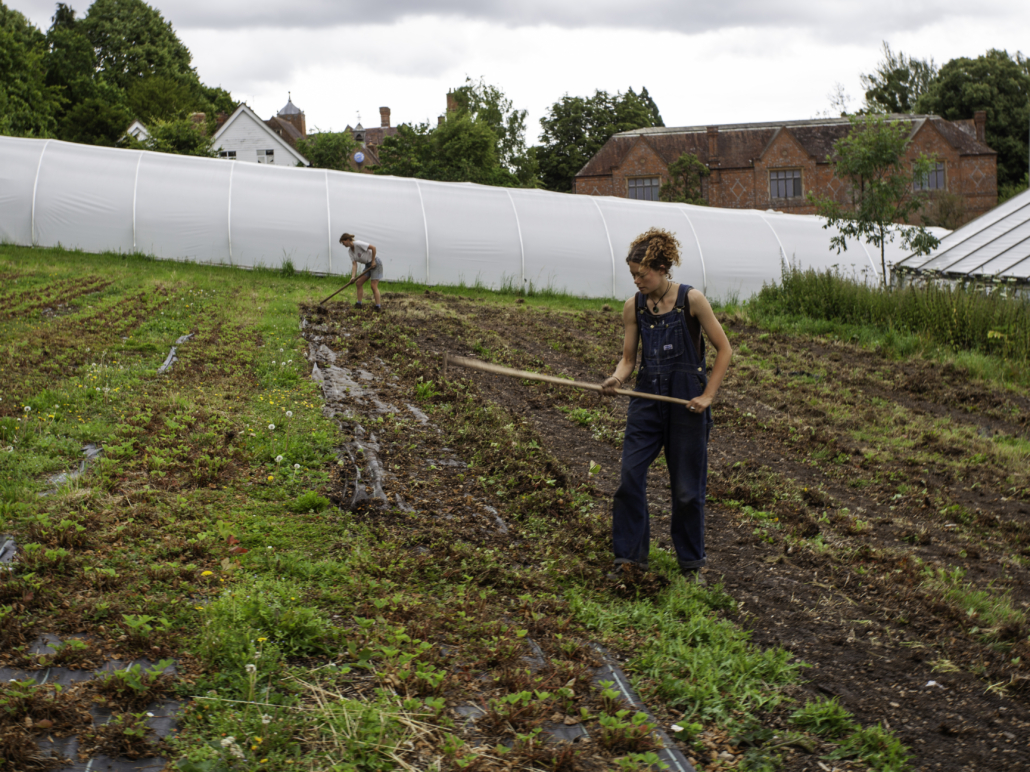
Growers in crisis?
by Iain Tolhurst, M.B.E. (Tolly)
I’ve been around the organic small (ish) scale organic growing community now for five decades and have seen a great many changes over that time.
Twenty years ago, my concerns were that there were almost no young persons taking up the batten to continue with the next generation of growers and farmers. So the “Organic Apprenticeship Scheme” was born, an initiative of The Thames Organic Growers group. This was well supported by existing growers and helped to kick start the new wave of young people keen to embark on a career in food production. It is wonderful to see that the trend continues, with ever increasing number of people wishing to get started with some land and get dirty hands, and face the challenges of growing food in a society where food is a long way down the list of most people’s priorities.
We hear of great stories with growers’ experiences and about all the positive boxes that we can tick as a result of our chosen way to save the planet. Or, at least, the few scrubby acres that we have been lucky enough to find a place within. There are many great examples of agronomic, social and environmental excellence with food being the primary product of the land and its soil. The soil being at the heart of what we do.
The enthusiasm of youth, in time, becomes tempered by the reality of grappling with multiple challenges of weather and even greater- the vagaries of the customers wanting to pay hardly anything for life sustaining food.
I have watched, with some dismay, clever and highly motivated people getting gradually worn down with what can become a daily grind of sweat and toil. The individuals that embark on this noble profession are, in the most part, people with enthusiasm for life and a positive attitude, and above all – willing to take a gamble. This very disposition ensures that we are often in denial about some of the consequences this lifestyle can exert on us as individuals, and on our vital support mechanisms – partners and our families.
The bottom line in all of this is that I struggle to find any small scale, or indeed just about any scale of production, that is able to pay its practitioners anything like even a basic income. We may be able to demonstrate sustainable viability, agronomic excellence, social responsibility and a host of other great attributes, but the goal of profit is as elusive as the hen with teeth.
Over my long career I have watched, slowly but inexorably, the financial viability of our farms decline year by year, as costs go up and food stays pretty much in the same value as it was when we started. Actually it’s worse than that. We are selling winter squash today at only 30% higher price than when we started to grow the crop commercially back in the early 90s, when basic income was £5/hr.
Farming is in crisis. For the smaller scale producers, it’s a crisis of mega proportions, but for most of us – we keep it quiet and will invariably put a positive spin on the story of our farms. I have seen the grower community come, and I have seen most of them go, unable to keep the relentless slog going beyond around year 10. This is incredibly sad, but it is also incredibly troubling, because we are losing the very best examples that we desperately need for the security of food production in a world with ever growing insecurities.
You may think that after 50 years of organic farming and with our reputation, Tolhurst Organic is thriving and can teach the rest how to survive. Quite the opposite! Tamara and I are paid less than minimum wages, as business executive directors and growers, and we have zero reserve for development and critical situations. Our three staff and their families are at risc of losing their livelihood unless we find a way to get by another year.
What can be done to halt this demise of the most important members of society? Well, I wish I had an answer or could wave a magic wand, but we live within a capital dominated society and our particular square peg of righteousness doesn’t really fit into the round hole of capitalism.
But we can embark on a journey towards some degree of resolve and that means talking about our issues and facing them head on. Getting a handle on what we face, owning up to the difficulties of our farms and looking at establishing a way forward for the preservation of what we all passionately love and believe so much in. Reminding ourselves of the massive benefits and all that is good and great about what we do, the strength to keep it alive.
I am proposing that we have a Growers’ Workshop, just one day (yes I know a month would be too short) to meet up and explore the subject. Hear other people’s stories, take a hard look at what we do well and what we do less well. This will involve as many growers as possible who can take a valuable day out to attend, and facilitators to manage the day. Support will be sought from partners (OGA Soil Association, LWA) and possibly related businesses such as Riverford, seed companies etc. Funding will be sought to cover venue costs and admin expenses, as well as presenters’ expenses if that is the case. The event will be free of charge but with a £20 booking deposit, covering the meal and refreshments. The day will have presentations and break out groups and of course a fantastic lunch to celebrate the power of food. We may not draw up a plan of action, but we will at least be talking about it and having a great day out!
Timing is critical so I am proposing Monday 24th March, before we all get frantic busy. Venue will be our place at Tolhurst Organic, we can accommodate up to 25, with the intention of repeating the event, if it is popular.

 Tolhurst Organic
This is a great idea, I can’t attend but would welcome the chance to contribute. I have a small organic market garden in Perthshire, a bit north of Dundee, now winding down due to my age after over 20 years and would be happy to feed in my impression of the situation in Scotland – I’m sure others would too if invited.
I read your post with sadness and great understanding, although not a grower, I have been a consumer of organic food for 25 years and as an artist and now a Spiritual bee consultant completely relate to the struggling to thrive in a capitalist society.
My no 1 message with bees is that to save them we HAVE to switch to organic agriculture as what is killing the bees is also killing us, yet like farmer Oak’s sheep, the general population follow each other over the cliff.
I felt compelled to comment as I hear you and want to shout out ‘we’re nearly there!’ Keep on keeping on, what you do IS saving the earth and all that live on it. Let’s collaborate more, like the bees, instead of the capitalist way of competing and separation. Do reach out if you’d like to talk about how we can help each other.