
 Tolhurst Organic, David Price
Beetroot: how can I use the glut?
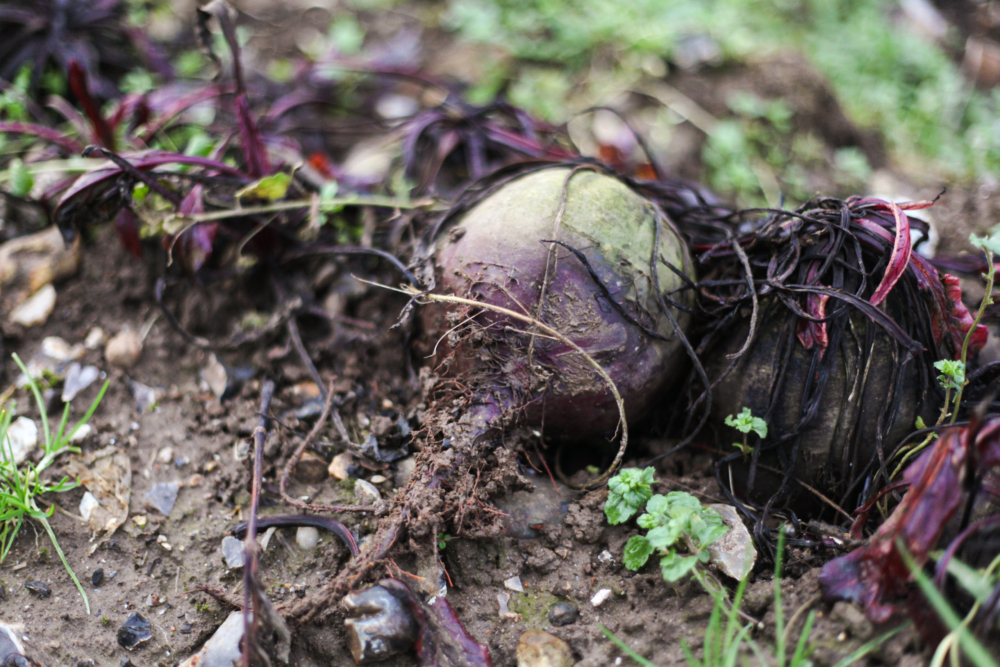 The humble beetroot accompanies growers for most parts of the year. From the tender baby beetroot in spring to the mighty round globe or long “almost-a-kilo” root, this is a crop that takes you through dozens of dishes and ways of using it, no matter what diet you follow.
Iron, magnesium, manganese, potassium and zinc – are all vital for a healthy body and fresh beetroot also contains vitamin C.
But fibre! Fibre is the one that will feed our microbiome and will eliminate toxins and waste, so eating fresh beetroot or drinking it in a smoothy (not juice, as juice eliminates the fibre) – is something I especially appreciate and value in beetroot.
And whilst spring baby beetroot is sweet and juicy and can be eaten almost like an apple, the winter varieties are more earthy in flavour and can be somewhat hard work to enjoy raw. Unless you pickle or ferment it, that is.
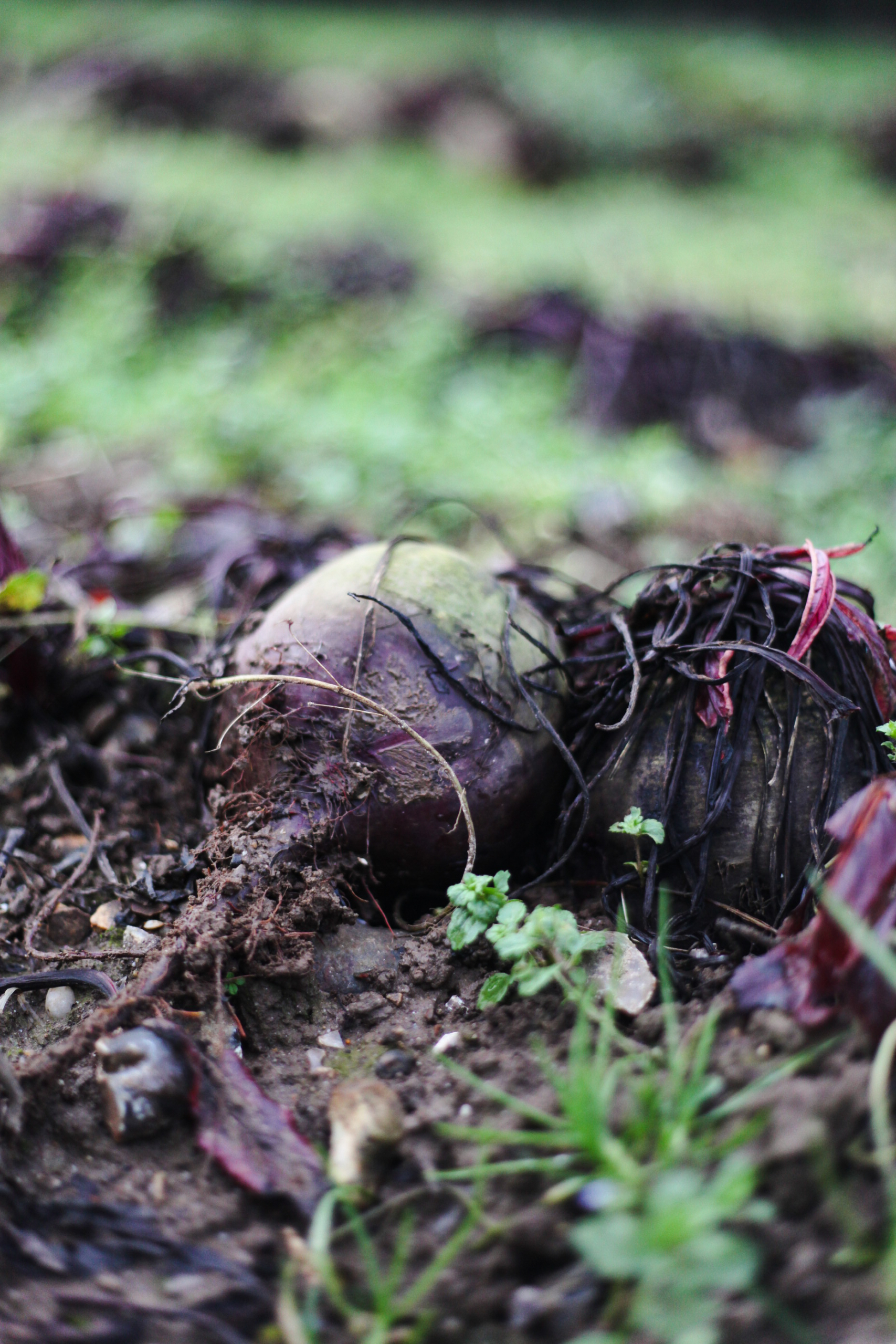
You can of course cook beetroot for soups and salads, or roast it. The opportunities are endless, but alas! December frosts damaged our winter crop and when complaints from Box Scheme customers started coming in, we have decided to leave the remaining crops in the ground, for the Soil to enjoy. Not before saving a few kilos for our recipe below.
Photos by our Dave Price
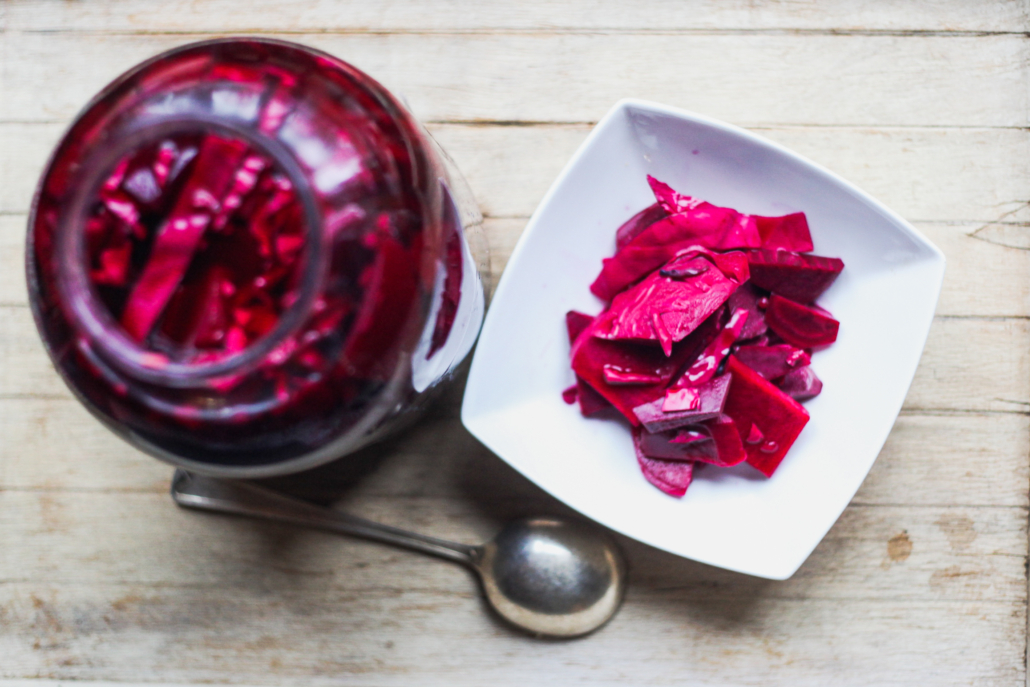
Fermented beetroot - raw and unpasteurised
 Tolhurst Organic, David Price
By Published: January 16, 2023
To be sure the veg will ferment in useful time, it helps to use 50-100ml of a starter. This can be salt brine from other fermented veg you have (not pickled - those contain vinegar!), a spoonful of live sauerkraut, a pinch of sourdough or a dash of kefir granules - anything that is live and will start feeding on the sugars present in the medium. One can try a piece of a kombucha mushroom, too. It is important to have at least a 3 litre-container. Smaller volumes do not tend to work very well, as bacteria need space and freedom to feed and multiply.
Ingredients
- 1.5 kg beetroot peeled and cut in 5 mm slices
- 1 whole red cabbage, optional cut in wedges. Can use white cabbage, too
- 3 cloves garlic peeled and sliced
- 1 teaspoonful black peppercorns whole
- 2 whole black radishes, optional Peeled and sliced
- 45-50 grams salt coarse
Instructions
- If using sourdough or sauerkraut as a starter, place at the bottom of your container. Arrange all the vegetables in the prepared container, spreading around in layers the garlic and peppercorns.
- Fill the container with water at room temperature, then pour the water in a measuring jug.
- If using a 3-litre container, the amount of water obtained will be around 1.5 litres. Add 3% coarse salt (fine cooking salt contains anticaking agent, which may kill the fermentation process). So if you have 1.5 litres of water, you need to add 45 grams of salt. Mix well until the salt dissolves completely.
- If using brine or other liquid starter, pour it over the vegetables in the container. Then add the salty water and make sure the container is full to the brims and even spilling over a bit. This is important because vegetables must be immersed and you do not want any air in your container.
- Cover with a tight lid, but not sealed. Place the container into an accumulating vessel (a larger bawl) and place in a very warm place, preferably dark. If your container is not glass, you can keep it on your work-top, somewhere near a source of heat. Light tends to affect a bit the colour of the veg.
- The medium should start fermenting in a couple of hours, if not immediately. You should notice bubbles of gas or hear tiny hissing noises. The not-sealed lid will let the gasses escape, together with some extra liquid (hence the accummulating vessel).
- If the lid pops-up, it is good practice to open it at least once daily, to let the excess gas escape but close it at once. Make sure your veg is immersed in liquid.
- You should be able to enjoy fermented beetroot in 4-5 days. When you like the taste and the texture, you can decant the large container into smaller jars of 500ml, or keep it as it is, in a very cool place, such as the fridge, unless you are lucky enough to have a cellar. Eat them as a side, as a pickle, in sandwiches, or add to soups and stews, especially the brine.
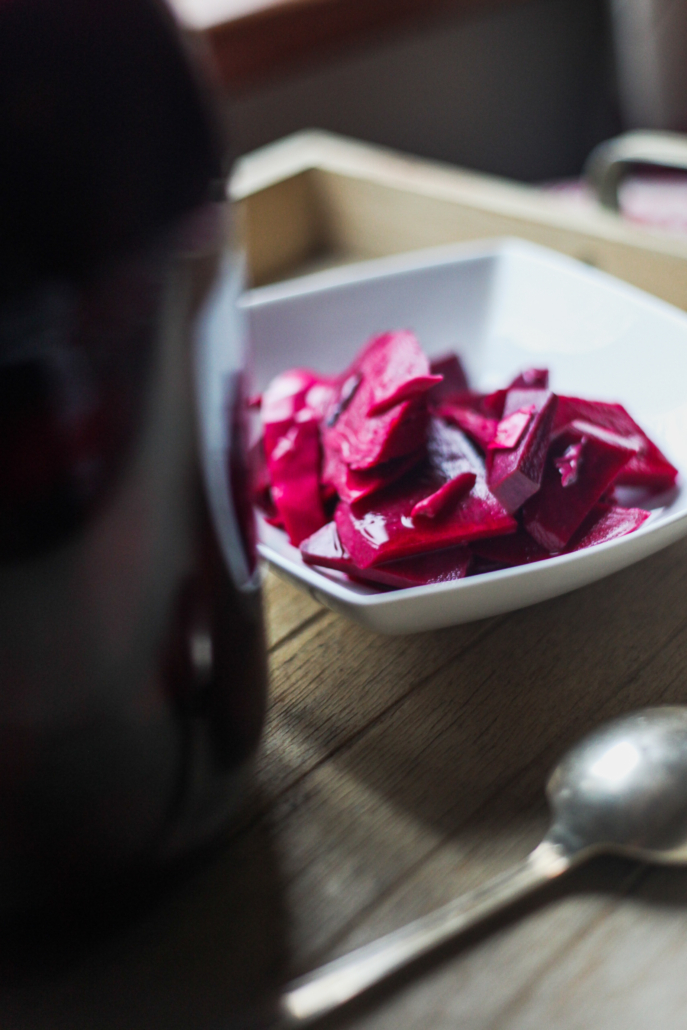
- The more you keep it, the more sour it will get. I like to eat mine early, whilst they are very active and whilst the initial sugars have not been completely devaured by the acido-lactic bateria inside.
- If you leave it too long, eventually the veg will become very sour, with no remaining sugars, or even go off, when bacteria have nothing to feed on and start feeding on themselves. And this is when the ferments can go off. But this process can take several weeks, especially if kept in a very cool place.
- A note of caution: there is very little that can go wrong with veg fermentation. However, if you do not like the way they look, the way they smell or the texture (slimy at touching with your fingers), then discard the contents and try again.



 Tolhurst Organic, Samantha Kroes