
 Tolhurst Organic, David Price
Sauerkraut Classic
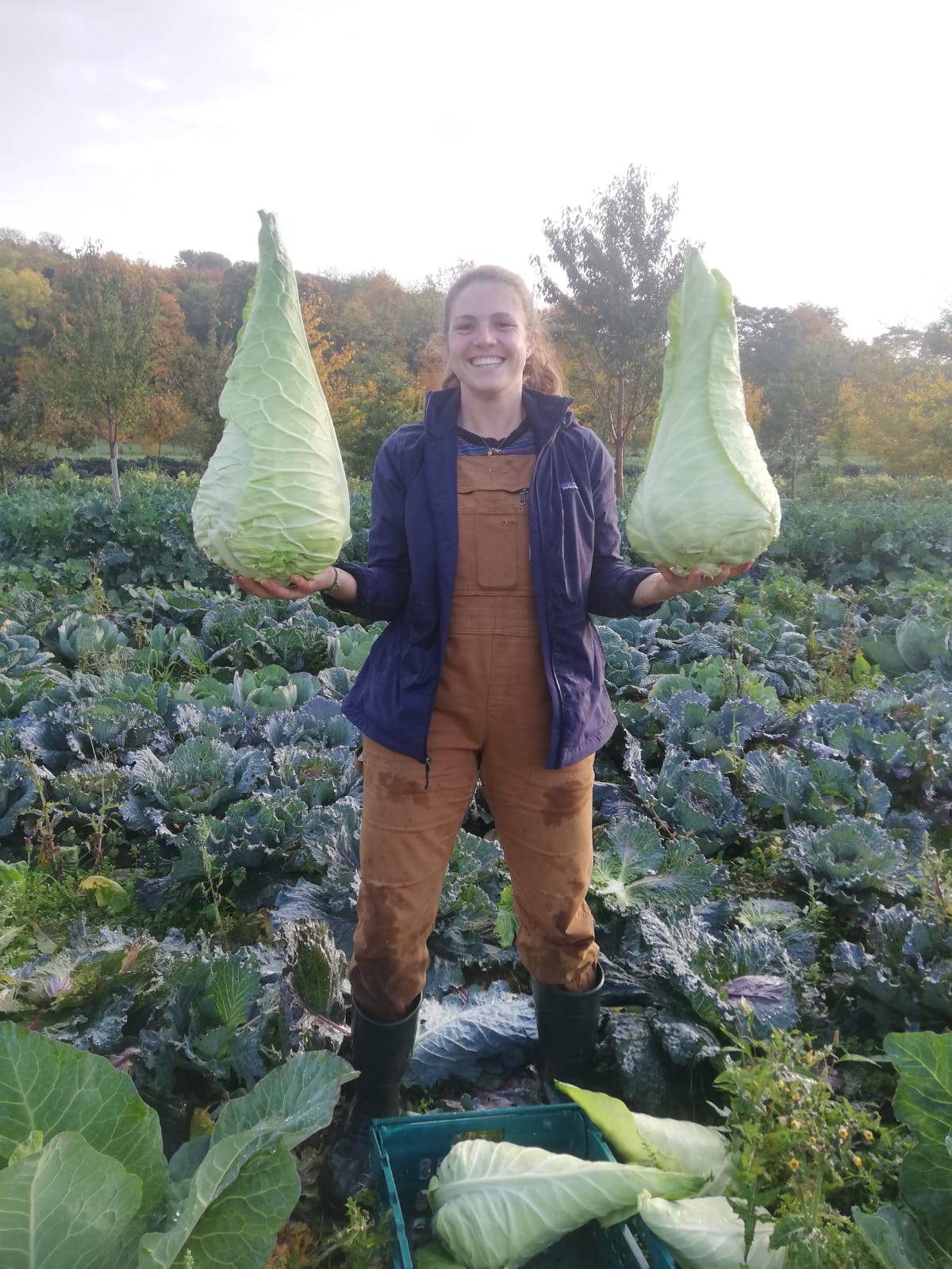
Fielder Kraut cabbage
You need to use Dutch White winter cabbage or Fielder Kraut cabbage for your sauerkraut. Do not waste your time with other varieties.
You can ADD other varieties if you wish, for example red cabbage or Brussel Sprouts, but you need the magic enzimes of these two types to make this work.
So, very simple rules:
1. Use at least 3-litre containers and fill them to the brim. Smaller volume tends to hold the good bacteria back, and let the bad bacteria win their initial battle. At least, this is my theory based on my experience – about the volume. But the battle between good (lactic) bacteria and bad (spoilage) bacteria is real and you need to provide a medium where the good guys win.
2. Only use coarse salt. Fine cooking salt contains anti-caking agents which seem to mess about with the fermentation process (another theory of mine, but based on many-many trials and errors).
3. Keep your container in a dark place, unless it is an enamelled or stainless still one (glass permits light to change the colour). Once you are ready to eat it, you can decant into smaller containers and keep in the fridge.
4. The longer you wait, the less sugars and initial flavours will remain, as bacteria will feed on them. So, why don’t YOU enjoy the goodness? Consume your sauerkraut as soon as you like the taste, then make more if you want, but don’t keep it for too long.
5. Always use your eyes (for colour), your nose (for smell) and your fingers (for texture) to test before you taste. If you don’t like any of these, discard the batch and start again. Good sauerkraut should be translucent, crunchy and smell pleasantly (if you’ve never tried sauerkraut, I cannot quite describe the smell, but you should just like it).
So, for whatever quantity of cabbage you have (a 3-litre container will take about 3 kg of cabbage), quarter your cabbage, remove the stalk and shred by hand or in a food processor.
At this point I add some grated carrots (optional, but it adds colour and sugars for good bacteria to thrive on), and a pinch of caraway or dill seeds, for a subtle Eastern-European flavour.
Then the salt. If you are experienced, you can add as little salt as you would add to a salad, and check for taste. If you are a beginner, or have larger quantities, then best to weigh your salt and play on the safe side. That is – 2% salt. And so for 3 kg of cabbage you need 60 grams of coarse salt. I know some people use 3% salt. It is somewhat safer, as it protects from spoilage, but I find it too strong. I actually add 1.5% salt, but this is cos I know what I am doing. Sort of.
Mix well and massage until the juices start enveloping your veg. Then place everything in your container(s) by pressing vigorously and leaving very little air.
Make sure the cabbage is immersed in its own juice, before your close firmly your container. With the right amount of juice, some of it should spill over the lid, that will seal the medium, away from air.
Firm but not sealed, as the fermentation gasses will need to escape somehow.
If using Kilner jars, you need to open them daily for a second to let the gasses out.
The gas will bring out quite a lot of juice as well, therefore, place your container in a larger one, at least for the first 4-5 days whilst fermentation is very active.
Keep for 3-4 days in a very warm place for immediate action, or in the fridge for a slow process.
It looks like a long process, but it actually takes less than an hour and a 3-litre jar will provide you with enough living goodness for most of the winter. Good luck!

#MyVeganFarmFood #RecipeBook
 Tolhurst Organic, Samantha Kroes
 Tolhurst Organic, David Price